Peptide Quality: Relevance Of Third-party Validation
Peptide Pureness Guide 98%, 99% & Research-grade Clarified Prg
In conclusion, comprehending peptide pureness degrees and grades helps you make informed decisions for your experiments. A peptide's pureness portion tells you just how much of that example is the genuine offer versus by-products, with common research study qualities being around 95% as much as 98-99% for additional purity. Analytical HPLC and MS are your buddies below-- HPLC evaluates pureness, and MS verifies identification, together guaranteeing you recognize what's in your tube.- Thanks to our exceptional scientists and effective mass spectrometry system, we off offers international consumer with extensive and professional peptide pureness evaluation service by using RP-HPLC.
- It divides the parts of a sample based upon their differential fondness for a stationary phase (column packaging material) and a mobile stage (solvent system relocating via the column).
- In concentration-response experiments, these impurities can change curves, flatten plateaus, or present biphasic behavior that obscures truth task of the target substance.
- These analyses are valuable when clients require greater than a mass range and chromatogram to evaluate whether a whole lot is really fit for measurable work.
- Due to the fact that peptides are developed via intricate chemical processes, trace pollutants can develop naturally.
- Peptide identification is mainly executed making use of mass spectrometry (MS), which offers accurate dimensions of peptide molecular weight.
Quality Assurance And Item Compliance In The Pharmaceutical Market
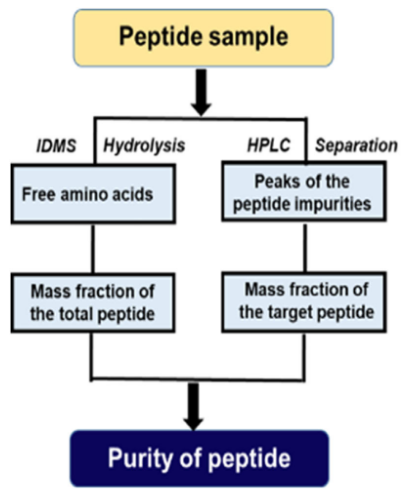
HPLC steps chromatographic pureness by dividing the target peptide from associated contaminations and calculating main-peak location percent. Mass spectrometry verifies molecular identity by checking whether the determined mass matches the anticipated peptide mass. For research-grade peptide certification, HPLC and LC-MS/ESI-MS solution different questions and must read together. BOC Sciences also provides extensive artificial insemination (cell platforms) and in vivo (pet systems) screening services to help clients totally recognize peptide formulation efficiency in different environments. In vitro examinations analyze peptide cytotoxicity, cell uptake, anti-inflammatory activity, and a lot more, providing basic data sustain for peptide applications in medical visual appeals and biomedical areas.
These modifications change the peptide's biological activity and chromatographic account. Peptides are sensitive to temperature, light, and chemical environments, making them susceptible to deterioration, which impacts efficiency. BOC Sciences offers accelerated stability, light stability, and chemical degradation experiments to systematically examine formula stability risks.If the COA provides "total pollutants", that complements the purity figure (e.g., 98% pureness implies 2% overall impurities). Numerous COAs likewise define well-known or "specified pollutants" versus unspecified ones, each with their specific portions if over a specific limit. This degree of information aids researchers understand if any type of minor peptide byproducts are present. If you see multiple big peaks of comparable height, you're checking out either a low-purity sample or a mixture. If the primary peak has a noticeable "shoulder"-- a bump on one side-- that frequently indicates a carefully related pollutant (like a deletion peptide) that the column could not fully fix. The peptide is passed through an easy purification action (typically gel filtering or a fast reversed-phase clean-up) to remove salts, small-molecule results, and scavengers from the cleavage action.
Exactly How Pureness Is Determined: Hplc Described Simply
BOC Sciences uses multi-batch contrast evaluation to aid clients develop basic material quality criteria and make sure consistency. Recurring non-peptide elements https://pharmagrade.store/ can transform assay analysis, distort peptide material estimations, and complicate great deal qualification. We sustain targeted evaluation of appropriate residuals based upon the job and example history.
Complementing HPLC, laboratories utilize Mass Spectrometry (usually paired as LC-MS) to validate the peptide's molecular weight and series identification. Mass spectrometry gives molecular verification by spotting the specific mass of the peptide and any kind of co-eluting types or trimmed sequences with high accuracy. Together, HPLC and MS information enable analysts to validate that the peptide's structure matches what it should be (appropriate amino acid sequence and expected alterations) which no significant pollutants exist.Understanding Peptide Purity Screening
High pureness is preferable due to the fact that even small contaminants may disrupt experimental outcomes or interpretations. This short article will certainly damage down how peptide purity is measured, why it's distinct from peptide identity, what the typical pureness levels (95%, 98%, 99%) symbolize, and what "research-grade" indicates in method for peptide reagents. Numerous peptide programs run into analytical unpredictability prior to they stop working clinically. We utilize sophisticated reverse-phase HPLC to figure out the pureness of customer peptide examples.Peptide testing is the collection of logical checks made use of to evaluate a peptide sample before it is made use of in a study process. In useful COA evaluation, the term normally describes pureness screening, identification testing, and documents evaluation. Pureness screening asks how much of the spotted example is the primary peptide versus associated contaminations. Identity testing asks whether the measured mass or sequence-related proof matches the intended peptide. Documentation evaluation asks whether the report is batch-specific, deducible, and described sufficient to be investigated. Peptide testing is the logical process utilized to validate that a research peptide is both pure and properly identified.
Trusted labs use tested screening protocols to assess peptide samples and validate their purity and chemical structure. One core technique is High-Performance Liquid Chromatography (HPLC), the gold requirement for evaluating peptide purity. HPLC divides peptide mixtures and can detect even small contaminations listed below 1% of the example [4] A regular laboratory will run the peptide via an HPLC system and generate a chromatogram-- the primary optimal corresponds to the target peptide, and any kind of additional heights indicate other substances. The purity is after that measured as the portion of the major peak area versus overall locations, providing an accurate action of just how pure the peptide is [2]
